
British Seasonal Flowers by Month: What to Buy for a Fresh, Local Bouquet
Ask a British flower grower what is worth cutting this week and you will get a very different answer in March than in September. That is the pleasure of buying seasonally: the bouquet changes with the weather, the light and the length of the day, and it usually smells far better than a uniform bunch bred for long-haul travel. If you want flowers that were cut in this country, a few days ago rather than a few weeks ago, the calendar is your best shopping list.
What British seasonality actually looks like
Much of the florist trade runs on imports: roses from Kenya, chrysanthemums from Colombia, tulips from the Netherlands. They are cut in tight bud, chilled hard and flown in, which is why they can look immaculate and smell of almost nothing. British-grown stems are usually cut within a day or two of reaching you. You get scent, movement and varieties you will not find in a supermarket bucket.
The trade-off is honesty: some British flowers have a shorter vase life, and you may need to change the water more often. There is also regional variation. Growers in Cornwall and the Isles of Scilly run two or three weeks ahead of Scotland, and a cold, grey spring can push everything back by a fortnight. Treat the months below as a rough map rather than a strict timetable, and ask your local grower what is genuinely at its best right now.
Spring: March, April and May
Spring arrives in layers. March belongs to daffodils and narcissi, hyacinths, pussy willow, flowering currant and the first blossom branches. Hellebores and early anemones appear if the winter has been mild, and tulips begin in the far south-west before anywhere else.
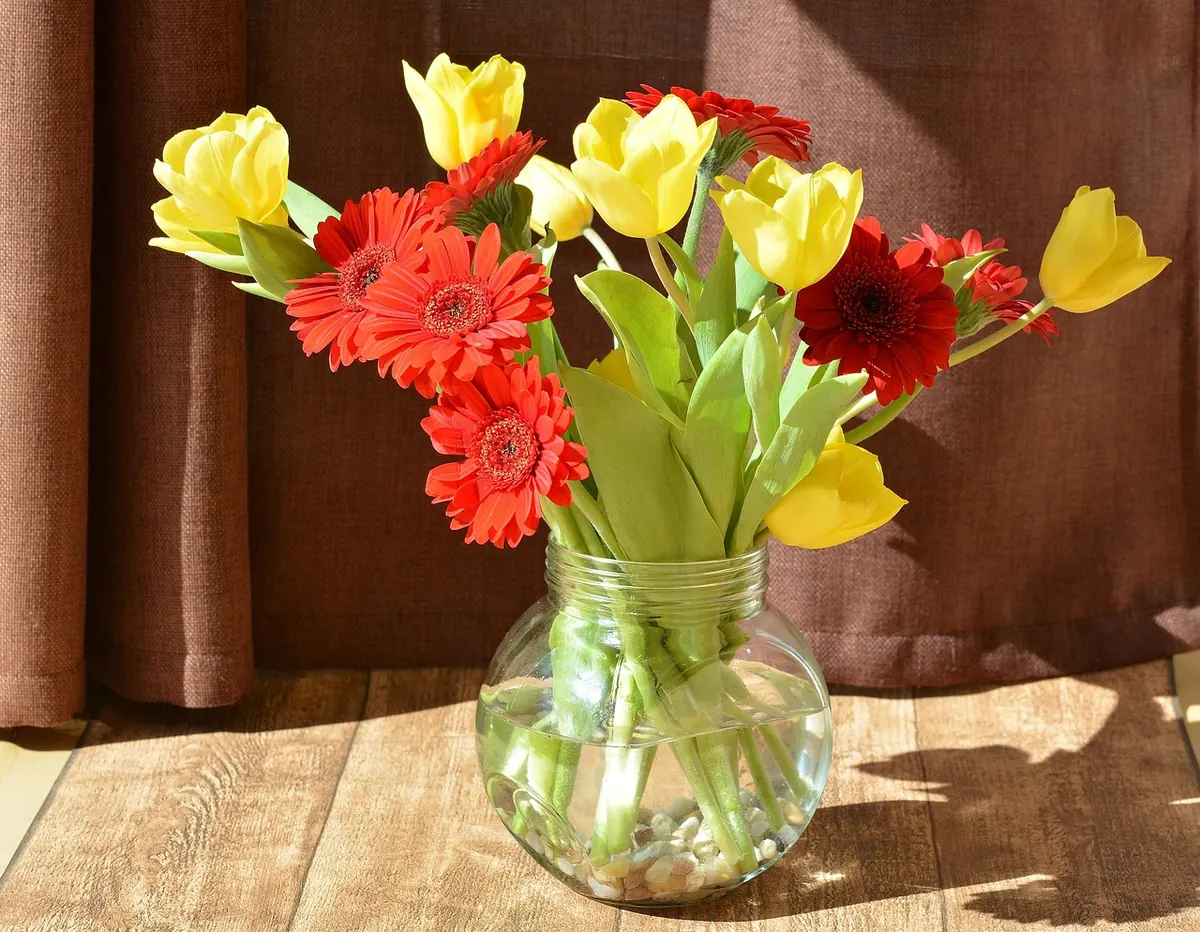
April is tulip month, and there is nothing quite like a bunch of British tulips in mixed colours, cut when the buds are still closed but showing colour. Wallflowers, forget-me-nots, honesty, euphorbia and the first aquilegias fill out the picture.
May is when the season becomes generous. Expect peonies, bearded iris, alliums, lily of the valley, sweet rocket, nigella, cornflowers and the earliest garden roses. Buy peonies when the buds feel like a marshmallow when you squeeze them gently — firm enough to hold, soft enough to open.
Early summer: June and July
This is the peak of British cut-flower growing. Peonies finish and roses take over, alongside sweet peas, delphiniums, lupins, scabiosa, campanula, larkspur and the first lavender. Sweet peas are worth buying for scent alone, and they last well if you pick a cool spot and refresh the water daily.
By July you will see dahlias starting, cosmos, phlox, crocosmia and the first hydrangeas. Consider a mixed bouquet rather than a single variety: British growers often sell "posies" of whatever is ready, and the combinations tend to be more interesting than anything designed on a colour chart.
Late summer: August and September
Late summer is loud and abundant. Dahlias are the star, in every shape from tight pompons to dinner-plate decoratives, joined by zinnias, sunflowers, rudbeckia, helenium, echinacea, gladioli and grasses. If you have ever wondered why florists get excited about dahlias, this is the month to find out.
September brings the Michaelmas daisies and other asters, sedums, Japanese anemones and hydrangeas that have begun to turn papery and antique-toned. It is one of the best months for British flowers because the palette shifts from bright to bruised: purples, russets, dusty pinks and deep greens.
Autumn: October and November
Dahlias carry on until the first hard frost, which could be early October in the north and nearer November in the south. Chrysanthemums come into their own, and they deserve better than their reputation — the spray varieties are excellent in a jug and last for a fortnight or more. Nerines, with their spidery pink petals, are a lovely late surprise.
The real autumn workhorses are texture and seed. Rosehips, hawthorn and cotoneaster berries, honesty and nigella seedheads, dried grasses, eucalyptus and ivy all make a bouquet feel like the season rather than a leftover of summer.
Winter: December, January and February
British winter flowers are quieter, but not empty. December brings evergreens, skimmia, ivy, berries and forced bulbs such as amaryllis and paperwhites. January gives snowdrops in mild western gardens, hellebores, winter jasmine and hazel catkins; Cornish narcissi start arriving before the month is out. February is the hinge: daffodils become plentiful, anemones and ranunculus return, and blossom branches are in the shops again.
A month-by-month quick reference
- January: snowdrops, hellebores, winter jasmine, catkins, forced bulbs
- February: Cornish narcissi, daffodils, anemones, ranunculus, blossom branches
- March: daffodils, hyacinths, pussy willow, early tulips, hellebores
- April: tulips, wallflowers, forget-me-nots, honesty, aquilegia
- May: peonies, iris, alliums, lily of the valley, nigella, early roses
- June: roses, sweet peas, delphiniums, lupins, scabiosa
- July: dahlias, lavender, cosmos, phlox, crocosmia, hydrangeas
- August: dahlias, zinnias, sunflowers, gladioli, rudbeckia
- September: asters, sedum, hydrangeas, Japanese anemones, grasses
- October: dahlias, chrysanthemums, nerines, rosehips, seedheads
- November: chrysanthemums, berries, ivy, eucalyptus, dried seedheads
- December: evergreens, skimmia, berries, amaryllis, paperwhites
Getting the best from a seasonal bouquet
Buy from growers' markets, farm shops and florists who label British stems, and ask what was cut this week rather than what photographs well. At home, strip any foliage that would sit below the waterline, cut each stem at an angle with a sharp knife or snips, and use a clean vase — bacteria, not age, is what kills most bouquets early. Change the water every day or two, keep the vase away from radiators, direct sun and the fruit bowl, since ripening fruit releases ethylene that ages flowers quickly.
A few stems need special handling. Poppies and other milky-sapped flowers last longer if you seal the cut end in hot water for a few seconds before arranging, and woody stems such as lilac and blossom benefit from a vertical snip up the base to help them drink. If you are ordering for a wedding or an event, speak to a British grower at least a season ahead: the flowers you have set your heart on may simply not be ready, but they will usually suggest something better that is.
Photo: Huỳnh Như Mavi / Pexels